Boards Before the Baubles: Drawing a 2026 Christmas Advert One Frame at a Time
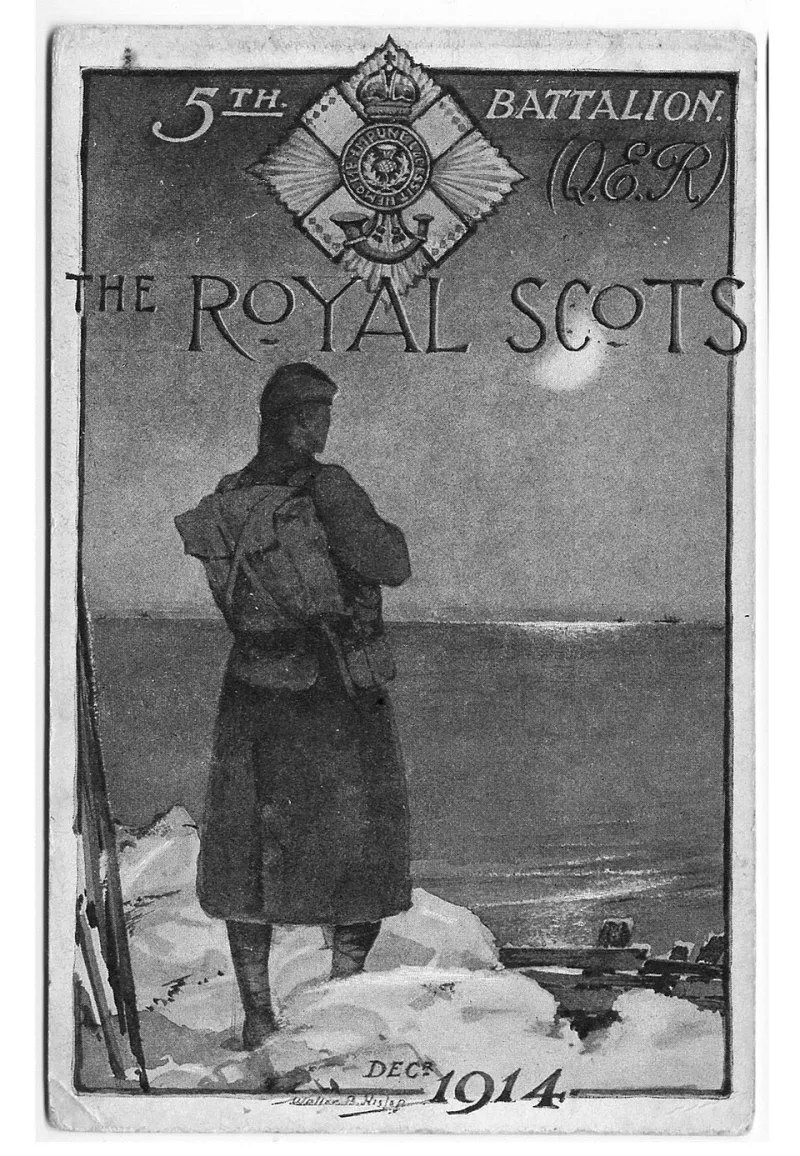
Photo: Walter Balmer Hislop (WBH) (Life time: date of death 1915), Public domain, via Wikimedia Commons
Every November the UK telly schedule starts to smell faintly of pine needles and voiceover. This year I gave myself a fictional brief: a 90-second Christmas advert for a made-up Yorkshire biscuit firm, set in a wet northern town, with no talking snowmen and no slow-motion sprinkling of icing sugar. The point was not to sell anything. The point was to draw the advert by hand, frame by frame, and see what the pencil caught that a glossy treatment might miss.
Start with the beat sheet, not the baubles
Before a single robin appears, I write the 90 seconds as beats on index cards. Cold open, bus shelter, missed bus, walk home, kitchen, hug, tin, tag. That is the spine. The advert is called, for now, 'The Long Way Round', and the fictional product is a winter tin from Marlow & Finch. It is not important. What matters is that the story has somewhere to go and enough quiet to get there.
The first draft was too tidy. A woman misses a bus, a stranger helps her, they share a biscuit, everyone learns about community. Fine, but familiar. So I pushed the weather forward. The bus shelter has a timetable with a corner curling up. The pavement is shiny. The stranger is carrying a bag that is clearly too heavy. None of this is plot. All of it is texture.
The first ten seconds need weather
Board one is not the product. Board one is a grey sky and a bus that has just gone. I draw the bus as three hurried rectangles and a smear of exhaust. The woman's coat is dark, her shoulders are up, and her shopping bag has a leek sticking out of it. Hand-drawn boards are good at leeks. They are less good at pretending everything is glamorous.
The first ten seconds are also where the advert earns its pause. I annotate the corner: hold on the empty road, let the rain do the talking. In a finished film that might be two seconds of atmos. On paper it is a scribble and an arrow, but the rhythm is already there.
The kitchen hug is a trap
The obligatory kitchen hug arrives at around 55 seconds, as it must. I tried drawing it straight away and it looked like a greetings card. So I redrew it as a near-hug. One person is still holding the kettle. The other has a wet sleeve. There is a dishcloth on the radiator. The hug happens, but it happens slightly off-centre, with a chair in the way.
That is the useful thing about storyboarding by hand. A perfect hug is easy to draw and hard to believe. An awkward hug with a kettle in it is easier to believe and harder to draw well. The pencil keeps asking where everyone's hands are. If the hands are wrong, the sentiment is wrong.
Product reveal without a spotlight
The tin appears at 68 seconds. No choir. No beam of light. It is already on the table, half-unwrapped, next to a mug with a chip in the rim. I draw the reveal three times: wrapped, opened, passed around. The product is not the hero. The product is the thing that gets the family to sit down.
By the third version I had added a small note: no slow-motion crumb. The tin is a tin. The biscuits are biscuits. The emotional work is done by the people who reach for them. A hand-drawn board is honest about this because it cannot hide behind lighting. If the moment only works when the product is shiny, the moment does not work.
Timing arrows and honest annotations
My boards are covered in arrows, circles and bossy little notes. 'Cut on kettle click.' 'Hold two sec.' 'Do not milk it.' 'She looks first, then he does.' These notes are the real storyboard. They tell the client where the feeling lives. They also tell me when I am over-directing. If I need six arrows to explain a look, the look is not clear.
Drawing a 2026 Christmas advert this way is slower than clicking through a digital template. That is the point. The seams show. A wonky tinsel garland shows. A radiator shows. A tea towel with a faded print shows. When the story is sentimental, those seams keep it from floating off into syrup.
What the pencil catches
By the end I had 24 boards, a beat sheet with coffee rings on it, and a fictional advert I would quite like to watch. It had a bus, a leek, a kettle, a near-hug and a tin of biscuits. It also had a pause before the hug, which is probably the only bit that matters. Hand-drawn boards do not make a story more professional. They make it more visible. At Christmas, visible is usually enough.