Quiet Corners: Seven UK Places That Reward a Slow Pencil
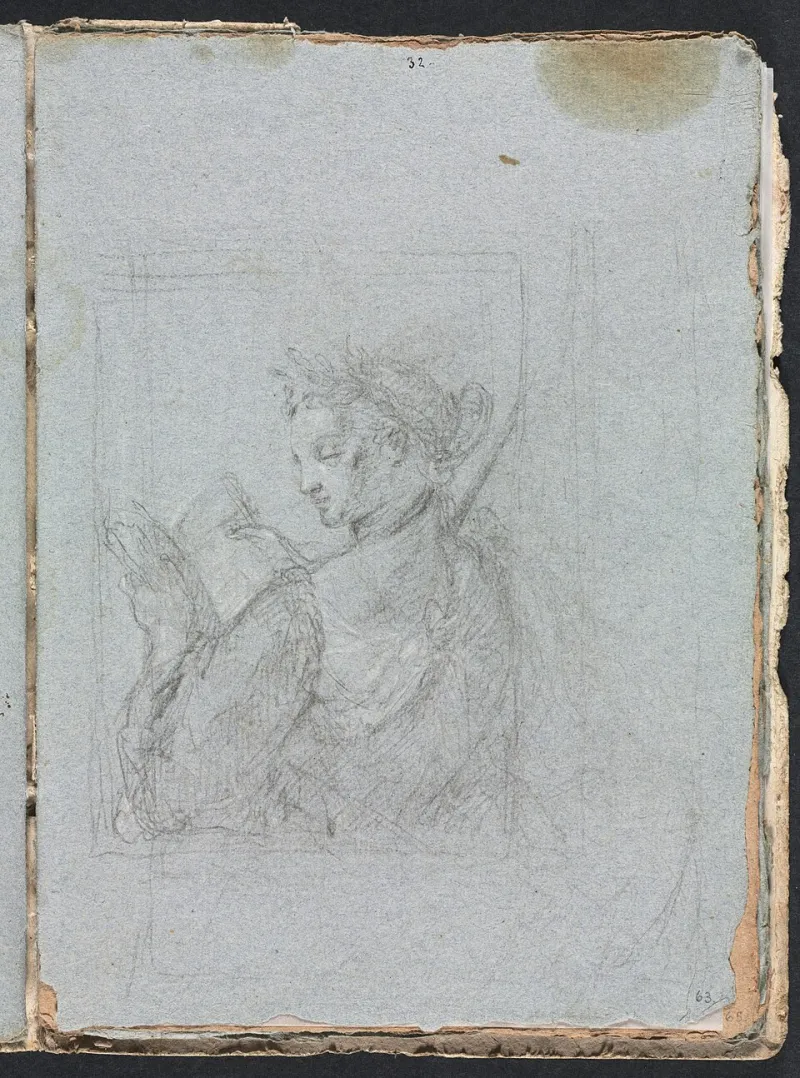
Photo: Francesco Lorenzi, CC0, via Wikimedia Commons
Some places make terrible photographs and wonderful drawings. That's not a flaw, it's a filter — and when the feed starts feeling like a room full of people shouting, it's a useful one.
What follows isn't a list of secrets. These are all public places, some of them quite well known locally. They're just quiet, and they're the sort of spots that reward somebody sitting still for forty minutes with an A5 book and a pencil. Check opening times before you travel, since they change with the seasons and the volunteers' holidays.
1. St Aldhelm's Chapel, Worth Matravers, Dorset
A squat Norman chapel on the cliff above the sea, built on a square plan with a heavy central pillar holding up the roof. It's tiny and dark and the wind outside sounds like it's trying to get in. On a grey day you might be the only person there.
Practical tip: coastal wind will take loose paper, so bring a clipboard rather than a spiral-bound book, and weight it with your flask. There's a walk down from the village and no shelter on the way back — check the weather properly, not optimistically.
Try this: draw the central pillar twice on the same page. Once as architecture, all angles and geometry. Then again as a figure — a person standing with their arms folded. Same object, two ways of seeing, and the second one will teach you more.
2. The Booth Museum of Natural History, Brighton
If you like drawing things that hold still, this is your place. A Victorian natural history museum with rows of glass cases, birds arranged in dioramas, and a particular dim, dusty sort of light that flattens everything beautifully. It's the opposite of a bright white gallery.
Practical tip: pencil only in most of these rooms — wet media and fragile collections don't mix. Sketching is welcome, but keep bags off the walkways, and check which days it's open before making the trip.
Try this: pick one cabinet and draw it as a single continuous line, without lifting your pencil. It'll go wrong. Do it anyway, then draw the same cabinet properly with your remaining time and compare the two.
3. St Ann's Allotments, Nottingham
The oldest surviving allotment site in the country, and an absolute warren of it: hedges, sheds, cold frames, runner beans on improvised structures, greenhouses held together with hope.
Practical tip: it's a working community, so ask before wandering deep into plots, and don't draw people's faces unless they've said yes. A folding stool earns you far more goodwill than standing and looming.
Try this: draw one plot as a cross-section, as though you'd sliced the whole thing like a cake — soil, roots, compost heap, shed floor. Allotments are secretly drawings about depth rather than surface.
4. Pells Pool, Lewes, East Sussex
Out of season, this 1860s freshwater lido is drained and still, and the empty pool reads as a strange piece of geometry rather than a place to swim. The water sometimes sits inches deep at the bottom and doubles the sky.
Practical tip: cold hands slow everything down, which is either the point or a nuisance depending on your mood. Fingerless gloves, and a pencil that's softer than you'd normally use so it doesn't fight the cold paper.
Try this: ignore the reflections as shapes and draw the water as pattern instead — horizontal dashes, dark where it's deep, broken where the wind catches it. Resist the urge to outline anything.
5. Halifax Borough Market, West Yorkshire
A Victorian covered market under a truly extravagant wrought-iron and glass roof, all octagons and arches, with the everyday business of eggs and fabric and cheap batteries happening underneath it.
Practical tip: go on a weekday morning if you can — Saturday is magnificent but hopeless for sitting down. There's usually a café with a mezzanine or upstairs window, which gives you the roof without craning your neck.
Try this: draw the roof structure as a flat pattern first, like a tile design, before you attempt any perspective. It's the fastest way to understand how the thing is actually built, and the pattern drawing is often the better picture.
6. Dent Railway Station, Yorkshire Dales
Perched above the dale on the Settle–Carlisle line, the highest mainline station in England, with a signal box and a platform that feels like it belongs to another decade. Between trains it's almost silent apart from the wind.
Practical tip: it's a proper walk up from the village, so build that into your day and check the timetable before you commit — the trains are also your only realistic way out. Bring a flask; the waiting room is a gift on a cold afternoon.
Try this: draw the platform before a train arrives. Then, ten minutes after it leaves, draw the same view again. Two drawings, same composition, entirely different atmosphere.
7. Key Hill Cemetery, Birmingham
One of the city's oldest burial grounds, cut into sandstone with catacombs along one side and a hillside of leaning headstones. It's a strange, calm, tree-heavy place with a long view over the roofs.
Practical tip: it's a working cemetery, so keep your voice down and stay off the fragile stonework — no rubbings on anything that looks like it might crumble. Check opening hours, as they're limited outside the summer months.
Try this: draw only the shadows, and specifically only the shadows the headstones cast. Leave the stones themselves as white paper. Once you've got the shadows down, you'll find the shapes of the stones are already implied.
What goes in the bag
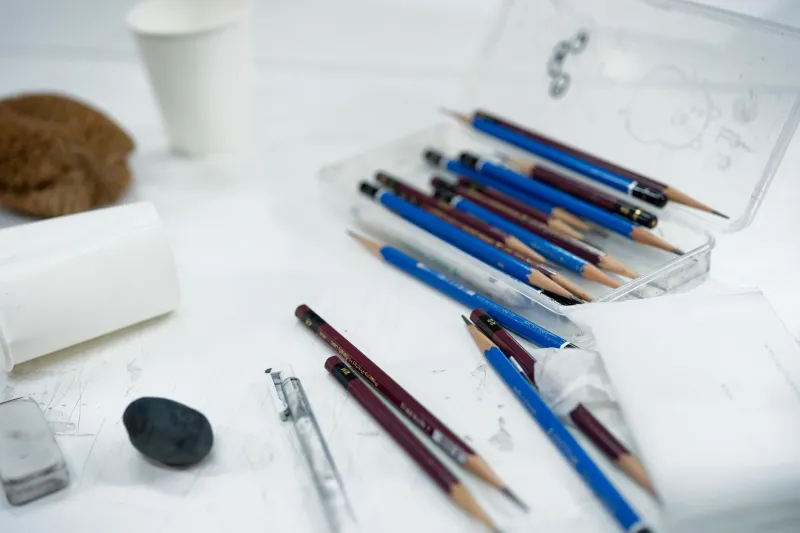
Keep it light enough that you'll actually leave the house: one A5 hardback sketchbook, a 2B and a 4B pencil, a putty rubber, a water brush if you're feeling brave, a folding stool, fingerless gloves between October and April, and a flask. That's it. The kit is never the problem.
A last thought
None of these places will give you a spectacular photo in under a minute. That's the whole reason to go. Forty minutes in a cold chapel with a bad pencil is a decent antidote to a loud week — and you come home with something that took time, which is more than most of the internet can say.