The Pencil Doesn't Lie: Keeping Illustration Slow, Wobbly and Visible in 2026
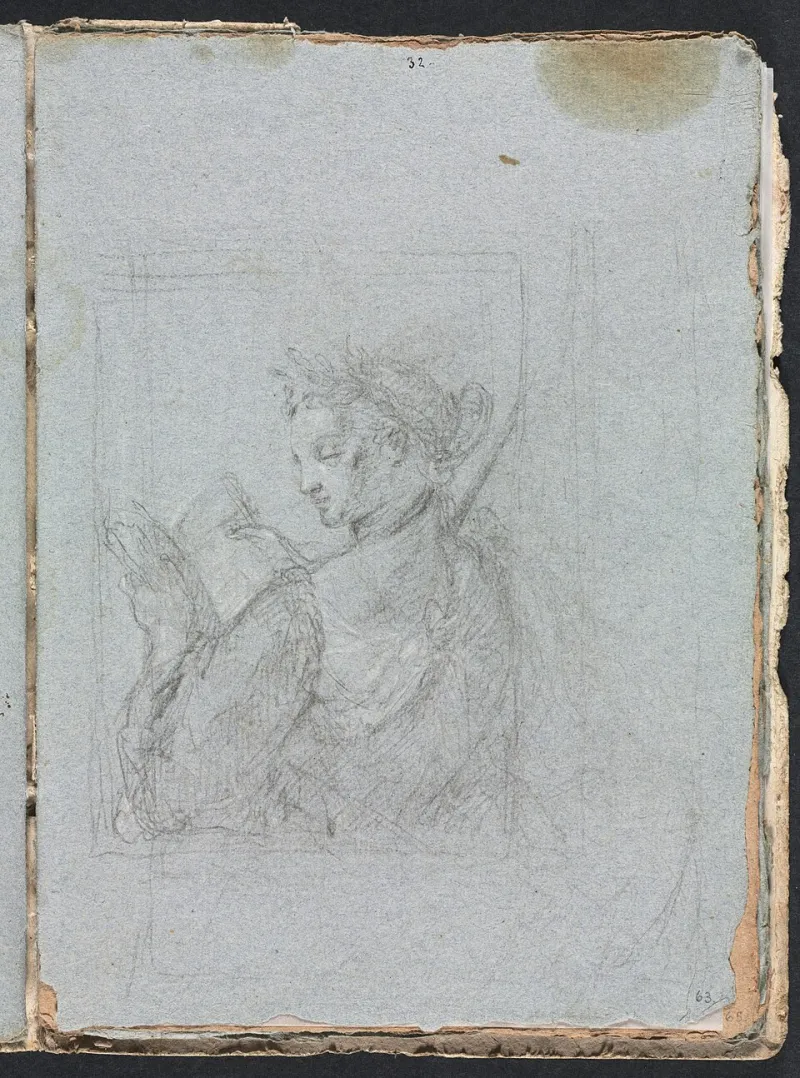
There's a drawer in my studio that will never make it onto the grid. It's full of pencil roughs that didn't work: a fox with the wrong shoulders, six attempts at the same lighthouse, a page where I set out to draw a mug of tea and produced something closer to a hat.
I keep them because they're evidence. Someone sat here. Someone made a decision, looked at it, and decided otherwise. That's the whole argument, really. Everything below is just me circling it.
The year everything got extremely smooth
2026 has no shortage of immaculate images. You know the sort — the ones that arrive fully formed, with the light already sorted and not one stray pencil mark left in to explain how they got there. Some are made by people, some by machines, and at thumbnail size on a phone you often genuinely cannot tell.
What you can sense is when a picture has no history to it. No friction. No moment where a hand stopped mid-line and thought, 'hang on, that arm's too long.'
The roughs are the actual work
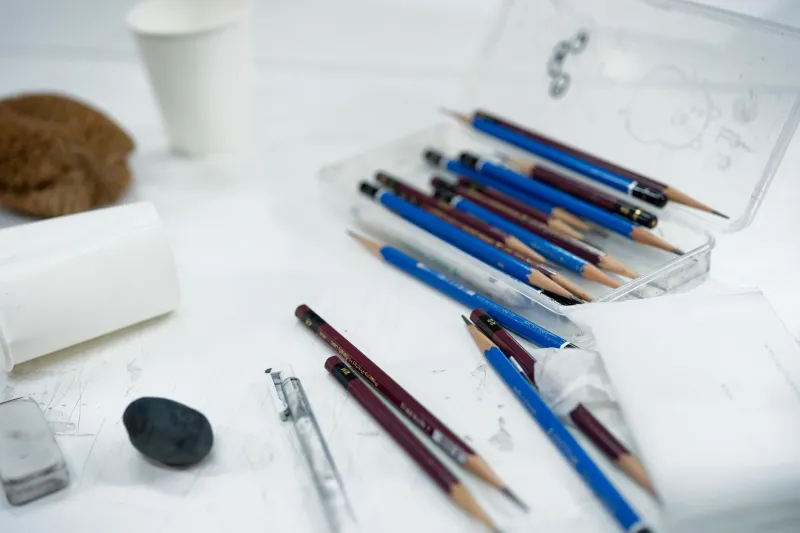
My process hasn't changed enormously in a decade. A3 layout paper, a 2B, a light box that hums. I draw an idea six or seven times before it settles, and the sixth version is usually the one that works precisely because the first five were allowed to be bad.
Clients sometimes ask if we can skip that bit. 'Could you just go straight to the finished thing?' You can — but you'll pay for it later, in revisions, in a brief that drifts, in that vague nagging feeling that the character isn't quite right and nobody can say why. The rough is where the thinking happens. The final artwork is a performance of the thinking, not the thing itself.
Three things a wobble tells you that a render can't
A wobbly line is information. Here's what I think it carries.
A record of decisions. Every thickened edge, every scraped-back correction, every place where the pencil pressed too hard shows a person weighing something up. That's a kind of authorship you can't fake convincingly, and audiences are far better at spotting its absence than we give them credit for.
A sense of time and scale. You can feel the size of a drawing from the width of the marks. You can feel how long it took from how the layers sit. There's a reason people lean in close to a hand-drawn cover in a bookshop — they're reading for the maker's fingerprints.
A signature. Nobody else's hand makes your particular wonky circle. That's a small, stubborn, extremely useful thing to own in a market where everything else is converging on the same glossy middle.
A slow manifesto, in seven plain rules
Not commandments. More like notes pinned above the desk.
- Show the second draft, not just the final. Post the rough alongside the finished piece occasionally. It costs you nothing and it changes how people read the whole portfolio.
- Leave one wrong turn in. A stray construction line, an over-run of ink, a visible bit of masking fluid. One is a texture. Ten is a mess.
- Keep a texture that can't be faked. Paper grain, ink bleed, a coffee ring you decided to work around. Scan at a decent resolution and don't airbrush it out.
- Give the sketch phase its own days in the calendar. Not 'Tuesday morning if there's time'. Actual days, booked.
- Draw it badly on purpose first. A five-minute rubbish version saves an hour of pretending you know what you're doing.
- Keep a private sketchbook with no audience. No scanning, no posting, no thinking about the algorithm. This one keeps the whole engine running.
- Charge for the time slow takes. Slowness isn't a discount.
Slow is not the same as struggling
This is the bit I want to be careful about, because there's a long tradition in British creative life of romanticising the grind — the all-nighters, the bad posture, the unpaid 'exposure' work, the RSI. None of that is craftsmanship. It's just damage.
Structured slowness looks almost boring from the outside. It's a decent chair, a lamp that doesn't flicker, a timer, a walk at four o'clock, a hard stop. The luxury isn't suffering; it's thinking time. It's being allowed to sit with a composition for twenty minutes before committing to it.
And slow doesn't mean analogue-only, either. I scan everything, tint in layers, nudge a colour, undo. The point isn't refusing the machine — it's making sure the decisions stay legible at the end.
If you're commissioning, here's how to ask for it
A few practical things that make a real difference on the client side.
Ask to see roughs early rather than at the eleventh hour — day two, not day ten. Split the sketch stage out as its own line on the quote so it's visibly paid for. Brief with references to handmade objects rather than to other people's finished artwork. Give feedback in words rather than vibes; 'make it pop' has never once helped anybody. And expect the final file to look a bit like paper, because it is paper.
The UK bit
We're a small set of islands with an unusually long history of drawing for print — Georgian caricature, Punch cartoons, Penguin covers, a children's book tradition that has quietly exported itself around the world. That inheritance is still visible in 2026: in risograph studios in industrial estates, in life-drawing groups meeting in church halls on Tuesday nights, in degree shows and print fairs where someone is selling a hand-drawn zine for four quid.
What I've noticed this year is more illustrators deliberately making the hand visible as a point of difference. Not as nostalgia, but as a marker: this was drawn by a person, in a room, in the UK, this year. There are bodies of advice out there — the Association of Illustrators' guides, regional drawing networks, the studio mates who'll tell you the truth about a rough — but mostly it's just people at desks, quietly refusing to smooth themselves out.
Back to the drawer
I'm not going to pretend those failed pencil foxes are worth framing. They're not. But they're why the finished work exists, and in a year when images arrive from nowhere with no history at all, showing the mess is a fairly radical thing to do.
Draw slowly. Leave the smudge in. Let somebody see you thinking.