Tape, Tabs and Tom Cats: Drawing the Parish Noticeboard Under Glass
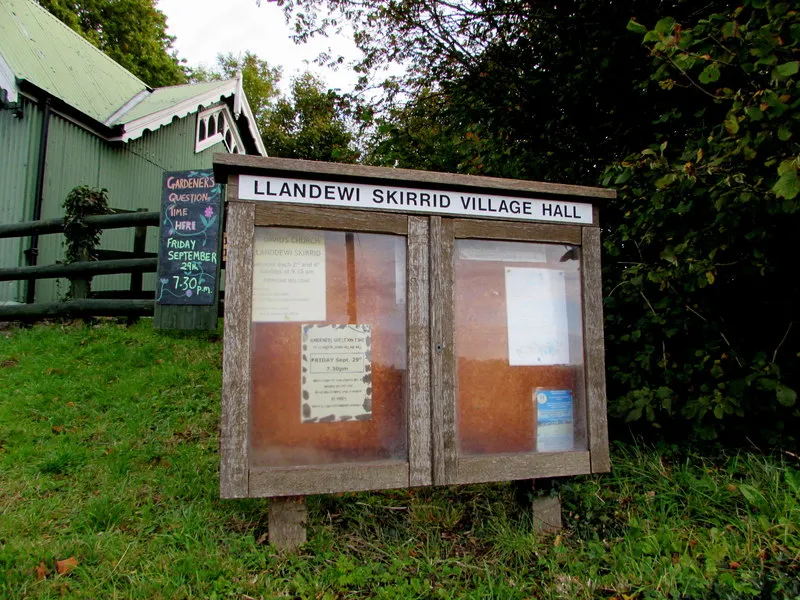
Photo: Jaggery , CC BY-SA 2.0, via Wikimedia Commons
The village hall noticeboard is not a designed thing. It is a sediment. Layer upon layer of A4 paper, pressed behind glass that has gone slightly milky with age, each sheet stuck down with whatever was to hand. On a wet Tuesday in November, with the light failing by half three, I set up a folding stool in the porch and spent a slow hour drawing it.
I had a 2B pencil, a putty rubber, a sheet of grey-toned paper and no particular plan. The plan, such as it was, arrived about ten minutes in: stop trying to draw the whole board, and start drawing the layers. The board is not a poster. It is a pile of small human decisions, all visible at once.
First, the glass
Drawing through glass is a peculiar business. You are not really drawing the notices; you are drawing the distance between you and them. The surface throws back a soft rectangle of sky, the outline of my own shoulder, the flicker of a fluorescent tube inside the hall. Every mark has to account for the reflection as well as the thing reflected.
The glass is also dirty in a way that feels honest. Fingerprints near the latch. A smear where someone has wiped it with a sleeve. A small scratch like a comma. I drew these first, lightly, because they set the tone. The noticeboard is not a pristine archive. It is a working surface, and the glass is part of the work.
A taxonomy of tape
Once you start looking at the tape, you cannot stop. There is the optimistic strip: one length of Sellotape, applied in a hurry, already curling at the corner like a dry leaf. There is the load-bearing cross: two strips over a hymn-sheet notice that has been there since Easter and is not coming down without a fight. There is the ghost rectangle: a clean patch where a poster has been removed, leaving behind a pale shape and a fringe of old adhesive.
I gave them names in my sketchbook, which is probably unnecessary but kept me warm. The Yellowed Hinge. The Double-Decker. The One That Has Given Up. Each one is a tiny record of someone thinking, that will do. It is the same instinct that makes a hand-drawn illustration feel alive: the visible correction, the mark that says a person was here.
Lost cats and found things
Halfway down the board, a lost-cat poster. Photocopied so many times the tabby has become a grey smudge with ears. The text is in Comic Sans, or something close to it, and the phone number has been written over in biro because the original was too faint. Around it, smaller notices: a book club meeting, a pilates class, a Christmas fair, a request for jam jars.
The lost-cat poster is the emotional centre of the board. Not because it is sad, though it is, but because it is the most urgent thing there. Everything else is forward-looking: dates, bookings, meetings. The cat poster is a plea in the present tense. I drew it last, once I had warmed up on the tape, and found that the pencil kept softening. It is hard to draw a photocopied face without treating it gently.
Tear-off tabs and the etiquette of hope
At the bottom of several notices, tear-off tabs with phone numbers, sliced neatly with scissors. Some have been taken. Some are still there, curling outward like tiny tongues. One notice has lost every tab except the last, which hangs by a corner and seems to be waiting for someone braver than me to pull it.
The tabs are a small piece of design that says: you might actually do this. They are an invitation to a future that may or may not happen. I drew them as a row of little rectangles, each one slightly different, because no one cuts straight. The wobble is the point. A machine would have made them identical. A person made them human.
The handwritten slip
Near the latch, a hall-booking slip, filled in with a blue biro. The handwriting is slanting and pressed hard, the kind that leaves a groove on the reverse. Someone has written the date, the time, the name of the group, and then, in the margin, a small note: keys from Margaret. I do not know who Margaret is. I do not need to. The slip is a portrait of a village organising itself, one borrowed key at a time.
This is the part I keep coming back to as an illustrator. The noticeboard is full of marks that were never meant to be looked at as marks. They were meant to be read and acted on. But put them together under glass, beside a child's felt-tip drawing of a bonfire and a faded hymn sheet for a harvest supper, and they become something else. An accidental collage. A group self-portrait. A record of what a place is worried about and looking forward to, all pinned to the same cork.
What the board knows
I packed up as the rain started again. My drawing was not tidy. The perspective was off, the glass reflections were approximate, and I had run out of room for the bottom row of tabs. But it felt true to the board: layered, slightly chaotic, held together by tape and good intentions.
The noticeboard under glass is not a monument. It is a living thing, updated weekly, ignored daily, read in a hurry. And yet it holds a kind of hand-drawn history that no website can quite match. The curling Sellotape, the faded cat, the last tear-off tab: these are the handmade marks of a village saying, we are still here, and we have a spare key if you need one.