Little Horrors of the Queue: Sketching a Bestiary of British Irritations
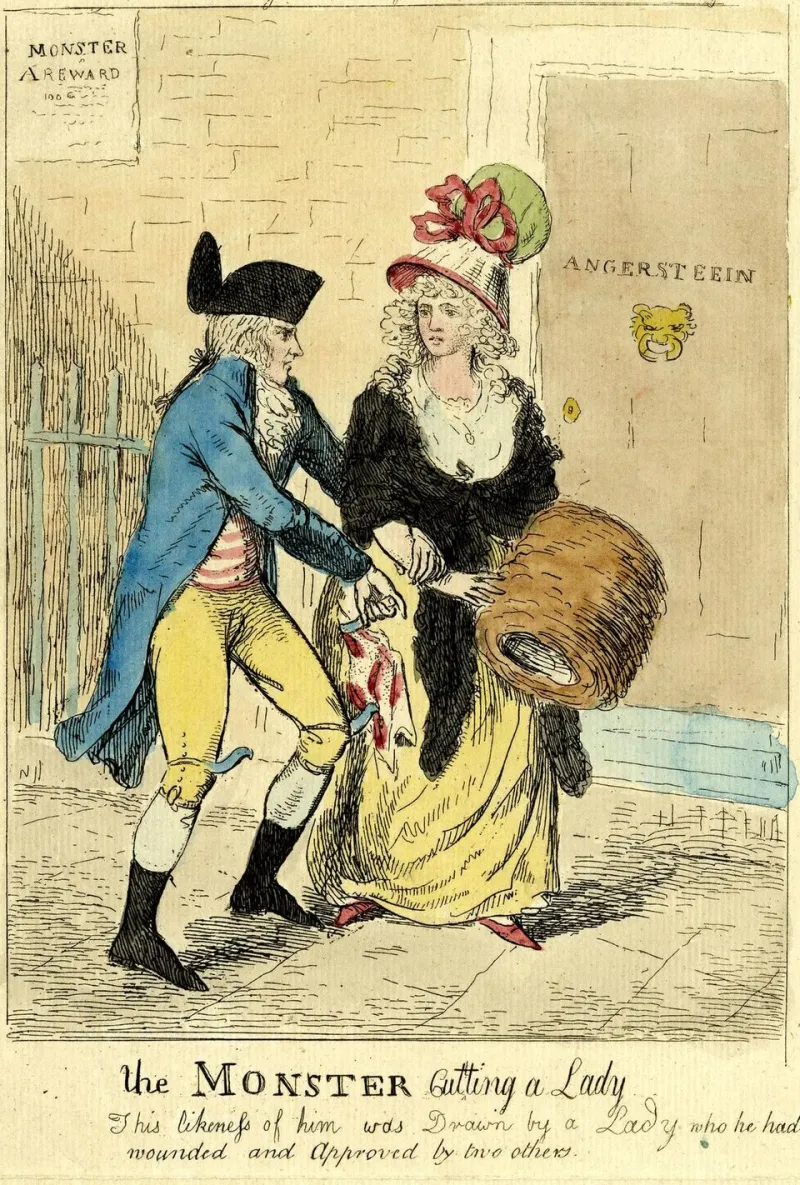
Photo: Print made by: Isaac Cruikshank Published by: S W Fores, Public domain, via Wikimedia Commons
There is a particular sort of British monster that does not live in castles or dark forests. It lives in the office kitchen. It lurks by the ticket machine at the station. It appears, fully formed, in the shape of a note that says: “Please could whoever used the last of the milk replace it. Thanks.”
For a while now, I have been keeping a sketchbook of these small horrors. Not dragons. Not giants. Just the everyday irritations that make us sigh, shuffle and mutter into our coats. The idea began as a joke — a bestiary of British bothers — but it has turned into one of my favourite drawing exercises. It is surprising how much character you can find in a lukewarm cup of tea.
Start with the sigh, not the monster
The mistake with this sort of project is to begin with a monster design. Begin with the feeling instead. What does it actually feel like when the self-checkout decides you are a criminal because you put your own bag down? What happens in your shoulders when the bus timetable says “due” and then quietly removes the bus from existence?
I keep a running list of annoyances in the back of my sketchbook. Nothing grand. Broken ticket machines, queue jumpers, the bin day boggart, the person who replies “as per my last email” in a tone you can hear through the screen. Each one gets a small note: where it happens, what it sounds like, what it makes me do. That last part matters. A monster is more convincing when it has a habitat and a habit.
The tea one, for example, is not really about tea. It is about disappointment. You make a cup, forget it, come back, and find something that is neither hot nor cold but somehow personally offensive. The feeling is slumped. Defeated. Slightly tannic. That gives you a shape almost immediately.
Thumbnails: giving irritation a silhouette
Once I have a feeling, I draw thumbnails in tiny boxes — no bigger than a postage stamp. The point is not detail. The point is silhouette. If the creature does not read as a little pest from across the page, it will not read as a character when it is inked.
For the lukewarm tea, I ended up with a sagging, amphibian thing with a tea-bag body and a face like a wet Rich Tea biscuit. For the passive-aggressive note, I tried a folded paper imp with sharp corners and a tiny, polite smile that is somehow worse than a scowl. The broken ticket machine became a brass-coloured goblin with a blank screen for a face and a slot for a mouth. It does not speak. It only says “unexpected item in bagging area”, even when there is no bagging area.
I like this stage because it is cheap. Bad ideas cost nothing. You can draw ten terrible monsters in twenty minutes and only one needs to survive. It is also the point where humour gets built in. A monster with a very serious posture and a very silly body is funnier than a monster that knows it is a joke.
From pencil to ink: building a character sheet
When a thumbnail works, I move to a character sheet. This is where the bestiary idea earns its keep. I draw the creature from the front, the side and the back, then add a few expressions: smug, apologetic, impatient, damp. I write in the margins like a pretend naturalist. Habitat: office kitchen, Monday morning. Diet: abandoned mugs and passive aggression. Weakness: a clean spoon.
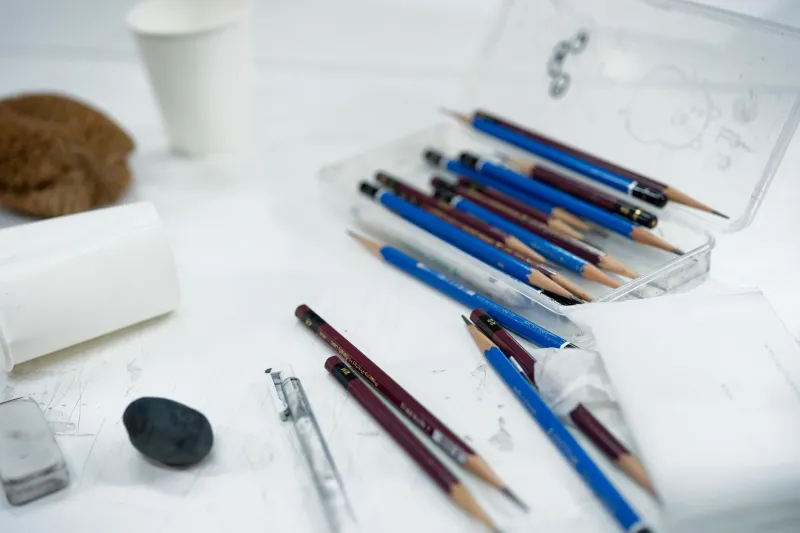
The inking is deliberately wobbly. I use a fine-liner for the outline and a brush pen for the heavy bits, then add watercolour washes that look slightly stained, as if the page has been left near a mug. I do not correct every stray line. A bestiary should feel found, not manufactured. The wobble is part of the field notes.
One of my favourites is the Queue Sprite, a small, anxious creature that stands exactly six inches too close behind you and huffs. Another is the Bin-Day Boggart, which lives under the wheelie bin and only appears when you have forgotten which week it is. The Ticket Machine Goblin has become a recurring villain. It has a little hat, a blank screen and no obvious purpose except to make a platform full of people say “oh, for goodness sake” in unison.
Why draw the small stuff?
There is a serious point under the silliness. Drawing everyday irritations makes you look at them properly. You notice the way a queue curves, the way a note is taped at a slightly passive-aggressive angle, the way a machine’s blank screen manages to look smug. That is good practice for any illustrator. Character design is just observation with the volume turned up.
It also takes the sting out of the day. A broken ticket machine is still a broken ticket machine, but once you have drawn it as a brass goblin with a little hat, it is harder to be truly cross with it. Almost.
I am not trying to build a grand fantasy world. I am trying to make a small, hand-drawn record of British bothers, one ink line at a time. If a bestiary of lukewarm tea and passive-aggressive notes makes someone laugh on the train home, it has done its job. And if it makes them notice the queue sprite standing six inches behind them, so much the better.