Nine Portholes, One Folding Table: A Launderette Comic in Pencil
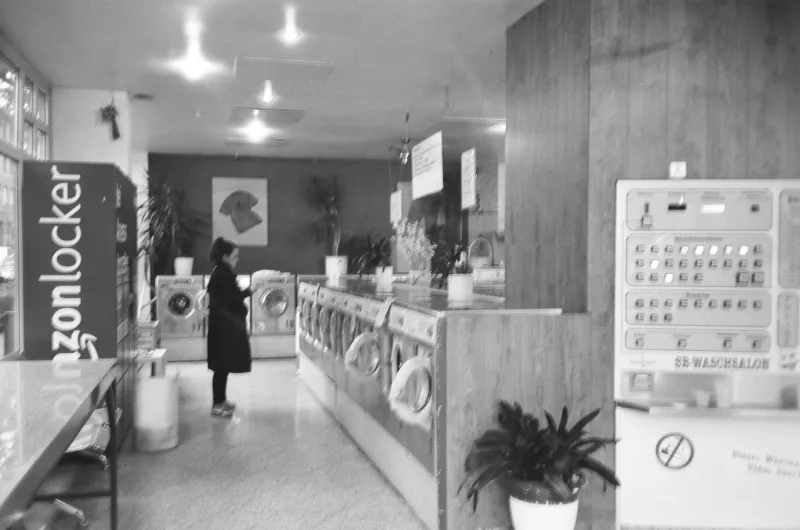
At twenty to six on a damp Tuesday in November, the launderette on the high street stops being a shop and becomes a lit aquarium. Outside, everyone is zipped up and walking fast. Inside, the machines turn like patient sea creatures, and the folding table has the solemn air of a stage before the actors arrive. I went in after the school run, sketchbook under one arm and a bag of washing I genuinely meant to deal with. I stayed for the comic.
The Warm Window Hour
There is a particular hour in a British launderette when the light does most of the drawing for you. Fluorescent tubes flatten everything into pale planes, then the portholes add their own small cinemas: a red sock going round, a duvet bulking out like a cloud, a single tea towel stuck to the glass. I sat on the plastic chair nearest the door, opened an A5 sketchbook and gave myself a rule: no rubbing out, no tidying, no pretending I was making a finished illustration.
The first page was rubbish, which is useful. I drew the coin machine too large, the noticeboard too small and a man's anorak like a bin bag with sleeves. But the portholes were already doing something interesting. Each one was a frame. Not a dramatic frame — nobody was going to find a hidden fortune in the drum — but a frame all the same. Same shape, same light, different washing. That is basically a comic strip waiting to be noticed.
Nine Portholes, Nine Frames
Back home, I ruled a three-by-three grid in pencil. Very lightly. I used a jam jar lid for the circles because I wanted the portholes to feel drawn, not engineered, and a jar lid gives you a wobble you can live with. In each panel I put the same view: the row of machines, the folding table, the strip light above. Then I changed only the contents of the drum and the person in front of it.
Panel one: a woman in a padded coat feeding a card into the machine, bag of washing between her feet. Panel two: the same machine, now full of soapy grey water, with one sleeve pressed against the glass like a hand. Panel three: an empty porthole reflecting the street outside. Panel four: a teenager sitting on the table, phone up, hood up, entirely unaware that she is the most interesting shape in the room. Panel five: the attendant's mop leaning against the dryer. Panel six: a man folding a fitted sheet with the grim determination of someone defusing a device.
I did not draw all nine. Six was enough to see the pattern. The point was repetition, not neatness.
Folding as Choreography
If the portholes are the frames, the folding table is the stage. This is where the launderette stops being a row of machines and becomes a small theatre of gestures. A woman shakes out a towel and it lands on the table with a soft thump. A man folds a shirt by holding it under his chin, which is a drawing in itself: elbow out, chin down, one hand pinning the collar. Someone else rolls socks into a ball and puts them in a carrier bag with the delicacy of a bomb disposal expert.
I drew these as thirty-second gestures first, on the back of a receipt, standing up. Elbows and wrists. The pause before a sheet is turned. The way a person leans back to check a fold. When I got home I redrew three of them, but I kept the quick lines underneath. You can see where the pencil changed its mind.
Drawing Speed Without Making It Slick
Catching motion in a launderette is not about drawing fast. It is about drawing often and being willing to leave things half-built. I used a 2B pencil for the general shapes and a 4B for the darker corners — under the table, inside the drum, the shadow behind the vending machine. No ink. No blending. No careful cross-hatching that makes a drawing look like a reproduction of a photograph. The fluorescent light is already unflattering; the pencil does not need to compete.
When a machine started its spin cycle, I drew the same porthole three times in a row, one minute apart. The clothes went from a slosh to a blur to a dark clump. Those three drawings became the middle panels of the strip. They are not polished. One of them has a line running through the glass because I moved my hand. I left it there. It looks like a reflection, which is a happy accident and also a lie I am comfortable with.
The Plot Is a Cycle
A comic set in a launderette does not need a punchline. The plot is already there: arrive, load, wait, fold, leave. The small dramas are enough. A lost sock. A machine that will not take a card. The attendant turning the sign to Closed while one person is still watching their final spin with the intensity of a sports fan.
I gave the strip a very modest shape: three rows, three moods. Top row: arrival, with damp coats and bags. Middle row: waiting, with the folding table and the phone and the mop. Bottom row: leaving, with the last porthole going dark and the street outside coming back into view. The final panel is just an empty drum reflecting a streetlight. No words. It is the closest I have come to drawing a full stop.
Leaving Before the Last Cycle
By ten to seven the attendant was stacking chairs and I was still drawing the vending machine. I closed the sketchbook, put on my coat and walked home with my own washing still unwashed. It felt like a fair trade. The launderette had given me nine small frames, three good gestures and a new respect for fluorescent light. The comic is not finished. It may never be finished. But it loops, which is what a launderette does anyway. You put things in, you wait, you take them out, and the portholes keep showing you the same story with different socks.