The Once-a-Year Wool: Drawing the Stories in a December Jumper Pile
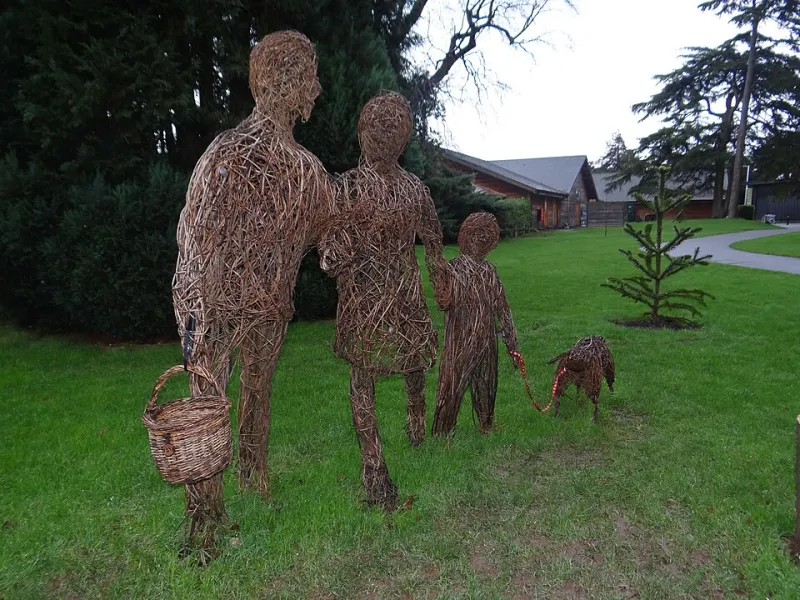
Photo: Ian Paterson , CC BY-SA 2.0, via Wikimedia Commons
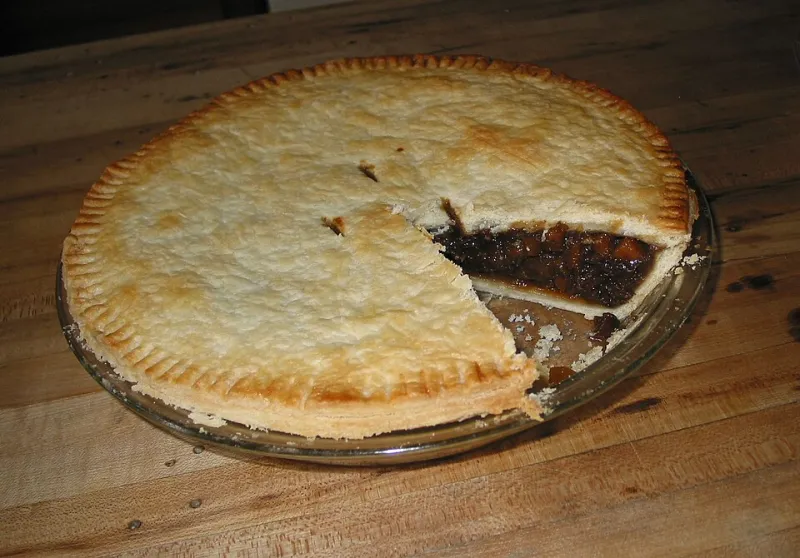
There is a particular moment at a December gathering when the coats go upstairs and the jumpers come out. The heating is on too high, someone is handing round mince pies, and the room fills with wool. Not ordinary wool. Once-a-year wool. The Christmas jumper is a strange little garment: part party wear, part family in-joke, part dare. This year I took my sketchbook to a relative's house in the Midlands and spent the afternoon drawing the jumpers in the room, one by one, while the kettle went on and off and the television murmured in the corner.
I did not set out to review anyone's outfit. That would be rude, and also missing the point. I wanted to draw the jumpers as small portraits: the way a person stands when they know they are wearing something silly, the way a sleeve sags at the elbow, the way a battery pack bulges under a hem. The Christmas jumper is less about fashion than about permission. It says: for a few weeks, you are allowed to be a bit much.
The quiet ones: Fair Isle and the tasteful knits
Every jumper pile has its quiet corner. These are the Fair Isle knits, the muted reds and greens, the cream yokes with tiny geometric patterns that look as if they have been there for decades. One relative wore a navy jumper with a narrow band of snowflakes across the chest. It was the kind of thing you could wear in January without comment, which is probably the highest praise a Christmas jumper can get.
Drawing Fair Isle is a lesson in patience. The pattern is a grid, but the wool is not. Lines wobble. Stitches pull. A motif that looks symmetrical on the body goes slightly off when a person folds their arms or leans forward for a biscuit. I used a fine pencil first, mapping the main bands, then coloured pencil over the top. The trick was not to make it neat. The charm was in the small misalignments, the place where the pattern had stretched over a shoulder or gathered at the cuff.
These are the jumpers that get worn beyond Christmas, or at least into early January. They are the ones people say they have had for ages. You can usually tell by the faint bobbling under the arms and the way the neck has softened. Drawing them felt like drawing a favourite chair.
The novelty layer: reindeer, sequins and a battery pack
Then there is the other end of the pile. The flashing reindeer. The sequinned snowman. The jumper with a pun across the front that makes one person laugh and another person stare into the middle distance. These are the jumpers that arrive with a story, often involving a secret Santa, a charity shop find or a determined aunt.
One of the best drawings I made all afternoon was of a reindeer whose nose actually lit up. The wearer had forgotten how the battery pack worked and spent much of the afternoon patting their hip to check it was still flashing. I drew the jumper in three states: off, gently glowing, and full disco. The wool itself was cheap and cheerful, the sort that catches the light in a slightly synthetic way, and the reindeer's antlers were already a bit misshapen from being folded into a drawer.
Kitsch is easy to mock and much more interesting to draw with affection. Sequins are a nightmare in pencil, because they refuse to sit still on the page. They are all little flashes, all highlights and shadows. I ended up leaving gaps in the colour and letting the white of the paper do the work. It looked like a jumper that had been attacked by a glitter pen, which felt accurate.
What people tell you while you draw
A sketchbook is a useful excuse for asking questions. While I drew, people told me where their jumpers came from. One was a gift from a sister who now lives abroad. One was bought in a panic on Christmas Eve. One had been passed down from a father who claimed he had never worn it, although there was photographic evidence suggesting otherwise. Another was knitted by a grandmother and was slightly too big in the shoulders, which the wearer said was part of its charm.
This is the thing about the Christmas jumper: it is rarely just a jumper. It is a small storage device for family history. The pattern matters, but the provenance matters more. A tasteful Fair Isle can be dull if it has no story. A flashing reindeer can be glorious if it was chosen by a child who thought it was the best thing in the shop.
Drawing wool: wobbles, sags and the family photo
The practical challenge is that wool is soft and pencils are not. I tried to draw the shape of the garment first, not the pattern. Where does the shoulder sit? How does the sleeve hang when the arm is holding a mug? Is there a little pool of wool at the wrist? Then I added the pattern, but loosely, so it looked worn rather than printed.
The most interesting part was the family photo. Someone always suggests a group picture, and everyone rearranges themselves into a line. Shoulders go back. Chins come up. The jumpers become a row of competing patterns, and the person in the flashing reindeer is usually told to stand at the end. I drew the moment before the photo, when everyone was still deciding whether to look serious or silly. That is where the relative embarrassment lives: the half-smile, the rolled eyes, the teenager who has been persuaded into a jumper and is now calculating how quickly they can change out of it.
The point of the once-a-year wool
By the time I closed my sketchbook, the light had gone and someone had put the fairy lights on. The jumpers looked different in the low glow: softer, less like costumes. They were just clothes again, warm and slightly ridiculous, worn by people who had made an effort to be in the same room.
That is what I want to remember from this December sketchbook page. The Christmas jumper is not really about taste. It is about turning up. It is about wearing something that says you are part of the group, even if the group is a bit embarrassing. And if you are very lucky, it also has a battery pack that still works.