A Spoonful of Chaos: Sketching the Steam and Squabbles of Stir-Up Sunday
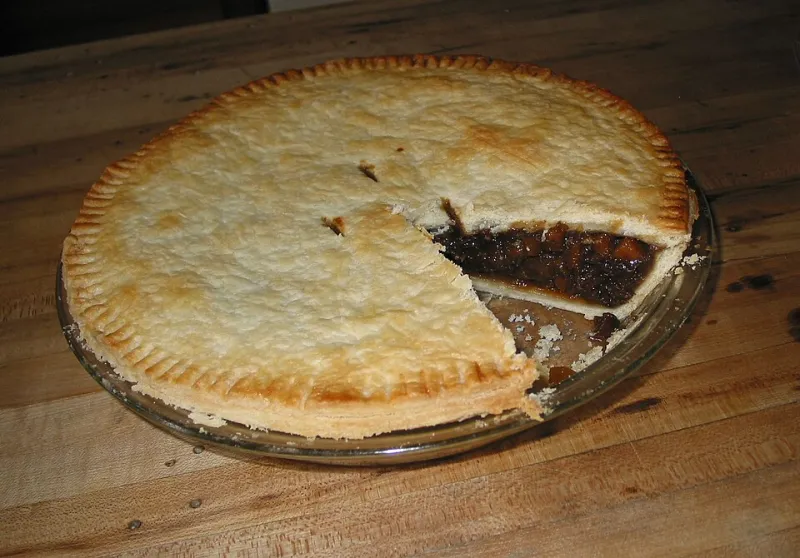
Photo: Alcinoe, Public domain, via Wikimedia Commons
Stir-Up Sunday has a smell before it has a look. It is dried fruit and brandy, suet and brown sugar, with a faint metallic edge from the old spoon that only comes out once a year. This year it falls on 22 November, so I have two weeks to sharpen the 2B, clear the kitchen table and pretend I will not get flour on the cat.
The tradition is simple enough on paper: make the Christmas pudding on the last Sunday before Advent, give everyone a stir and a wish, and steam it for hours. In practice it is a small domestic opera. Someone cannot find the basin. Someone else insists the mixture must be stirred clockwise. A third person stirs anti-clockwise out of pure mischief. The kitchen radio is too loud. The scales are dusted with last year’s flour. And somewhere in the middle of it all, a sixpence is wrapped in baking parchment and dropped into the mix like a tiny, controversial treasure.
That is the scene I want in the sketchbook. Not a tidy magazine pudding. The real one.
The kitchen before the flour flies
I always start with the ingredients, because they are easier to draw than people and they do not answer back. Currants become tiny ink dots. Candied peel looks like orange commas. Suet is pale and slightly strange, a shaving of something that belongs in a Victorian pantry. Muscovado sugar is all dark crumbs and clumps. The breadcrumbs are the hardest: too small to draw honestly, too important to leave out.
My grandmother’s recipe card is propped against the kettle. It is stained, faded and written in a hand that slopes downhill. I do not copy it exactly, but I like having it there. It makes the page feel inherited. In 2026, when so much of Christmas arrives in an app or a next-day box, there is something stubborn and good about a recipe that requires a basin, a spoon and a willingness to stand still.
The first pencil pass is light. I block in the bowl, the scales, the spoons, the packets. I leave gaps where the hands will go. I have learned that if I draw the hands too early, the drawing becomes about hands. Stir-Up Sunday is about the whole kitchen: the cluttered counter, the tea towel, the spoon rest that is really a saucer, the cat pretending not to be interested.
Drawing steam without drawing fog
Steam is a liar in pencil. It looks like smoke, then like grey wool, then like nothing at all. If I draw every curl, the page turns into a fog. If I draw none, the pudding looks cold and cross.
My solution is to draw the steam in two ways. First, I put in the hard shapes around it: the rim of the basin, the lifted lid, the wooden spoon leaning out at an angle. Then I add a few soft graphite smudges with my finger, just enough to suggest heat leaving the bowl. In ink, I add one or two broken lines. Not a cloud. A suggestion. The eye fills in the rest.
The same goes for the sticky spoon handle. A clean spoon is a lie. A real stirring spoon has a handle furred with pudding mix, a dark smear near the thumb, a shine where someone has wiped it on a tea towel and missed. I draw the stickiness as tiny flecks and a slightly uneven outline. It is not glamorous. It is accurate.
Sixpence, string and the politics of stirring
The sixpence is the best part of the drawing and the worst part of the planning. Traditionally it is a silver coin hidden in the pudding, said to bring luck to whoever finds it. In our house it is wrapped in parchment and treated with the seriousness of a border negotiation. Someone always asks whether it is safe. Someone always says their grandmother simply dropped it in. Someone always stirs extra hard in the hope of feeling it.
I sketch the basin with the string tied round the top, the pleated parchment, the knot that looks easy until you try it. I draw the sixpence separately, like a tiny relic, because it is easier to control on the page than in life. Then I put it back in the scene, half hidden by a spoon and a hand.
The stirring itself is a gift for a sketchbook. Everyone stirs differently. There is the brisk, efficient stir of someone who wants the job done. There is the theatrical stir of someone making a wish. There is the suspicious stir of someone who has been told to go clockwise and is definitely going anti-clockwise. I do not need to draw every face. I can draw one sleeve, one wrist, one wooden spoon and let the argument happen in the negative space.
What the mess leaves on the page
By the time the pudding is in the basin and the kitchen looks like a flour bomb has gone off, my page is always messier than I planned. There are thumbprints near the edges. There is a smudge where the steam was. There is a small, unexplained crumb of something dark near the corner.
I used to tidy these away. Now I leave them. They are part of the drawing. Stir-Up Sunday is not a polished performance. It is a hand-me-down ritual, full of sticky spoons, family opinions and the low hum of a steamer on the hob. The sketchbook should look like it was there.
So this year, on 22 November, I will draw the flour-dusted scales, the sixpence and the great clockwise debate. I will draw the steam badly and the spoon handle honestly. And when someone says the pudding needs more brandy, I will put down the pencil, stir once for luck and get on with it.