Soot, Dew and Discarded Gloves: A Slow Pencil Walk Through 6 November
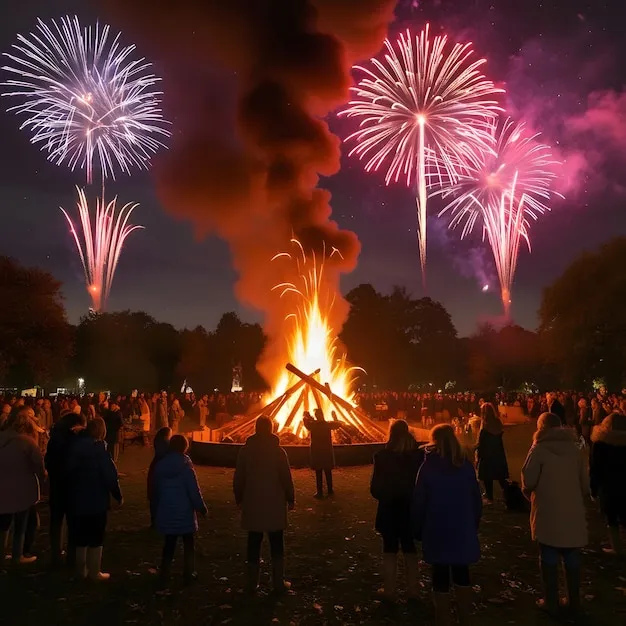
Photo: bonfire night aftermath park ashes damp grass discarded glove UK morning, via img.freepik.com
There is a particular kind of silence in a park the morning after Bonfire Night. It is not proper silence, not the deep hush of a frosty Sunday. It is a crunchy, damp, slightly sheepish quiet, as though the grass is still deciding whether to complain. I went out on 6 November 2026 with a sketchbook, a flask and the sort of optimism that ignores the forecast. The forecast, as ever, had the last laugh.
The Park at 7:40am
The first thing I noticed was not the bonfire. It was the gloves. One red wool glove on the path, fingers pointing towards the swings. One black glove near the bin, palm up, as if surrendering. A single mitten on a bench. Bonfire Night is apparently also a mass shedding event for knitwear, and nobody talks about it.
I drew the red glove first because it was the easiest thing to love. It had that slightly felted look wool gets when it has been rained on and then warmed by a hand and then rained on again. The fingers were curled. I kept the line wobbly on purpose. A too-perfect glove would have looked like a product illustration; this one needed to look like it had opinions about the weather.
Around it, the ground was a mess of tiny paper tubes, spent sparkler wire and the grey confetti of burnt cardboard. Not glamorous. But very drawable. The trick with leftovers is to stop looking for a big scene and start looking for small crimes. A scorched patch of grass. A half-buried rocket stick. A puddle with a rainbow of firework casing in it.
Drawing Wet Grass Without Making It Look Like Moss
Wet grass is a liar. In photographs it can look like a green carpet. In real life it is a thousand separate blades doing their own thing, half of them bent, half of them stuck to a trainer. My first attempt looked like moss. My second looked like a bad wig. The third worked because I stopped trying to draw grass and started drawing the gaps between the blades.
I used a dry 2B pencil for the dark clumps and kept the paper bare for the dew. Then I went back in with a white gel pen for the brightest highlights, but only a few. Too much white and it looks like frost. Just enough and it looks like a park that has not quite woken up. I also left the smudges. Smudges are honest. A sketchbook that never smudges is probably not being used properly.
The path was another useful lesson. Tarmac after Bonfire Night is not black. It is charcoal, mauve, a bit of brown, and whatever colour the nearest takeaway wrapper happens to be. I built it up in layers: soft graphite first, then a harder pencil for the grit, then a rubber to lift out the wet shine. The result looked less like a road and more like a very old, very tired biscuit. Which, frankly, is accurate.
Smoke Is a Shape That Refuses to Sit Still
The bonfire itself was still going in a sulky, smouldering way. Not flames, just heat and a thin column of smoke that changed its mind every few seconds. Smoke is brilliant and infuriating. You cannot draw it as an outline because it has no outline. You cannot draw it as a cloud because it is not fluffy. The only thing that worked was to draw the things it touched: the fence post going soft at the edges, the tree behind it losing its branches one by one, the pale sky turning a bit greasy.
I made three quick studies. The first was too neat. The second was too dramatic, like a disaster film. The third was just a few grey scribbles with a lot of empty paper around them, and that was the one that felt like smoke. Process note for anyone trying this: leave more space than you think. Smoke needs room to drift. Also, do not lick your pencil. I know it looks like charcoal. It is not charcoal.
The Guy Fawkes Post-Mortem
Then there was the Guy. Or what was left of him. He was slumped against the base of a litter bin, one arm missing, his straw stuffing spilling out like he had simply given up. His face was a carrier bag with a marker-pen smile that had run in the damp. I have never seen anything look less like a political statement and more like a shopping list that had a terrible night.
And yet, there is something very British about the whole thing. We spend actual money on a cardboard effigy, dress it in old clothes, parade it about, burn it, and then the next morning we stand around saying, “Well, it was a bit damp, wasn’t it?” as if the dampness was the main issue and not the fact that we have just committed arson on a scarecrow. I drew him twice. The first drawing was too sad. The second was better because I gave him a slightly surprised eyebrow. Comedy is often just a well-placed eyebrow.
I did not tidy him up. It felt wrong. The whole point of the morning after is that nothing has been tidied up yet. The park is still holding its breath. The bin is full. The grass is flattened in a big circle where people stood. There is a lone sparkler sticking out of the mud like a tiny, disappointed flag.
What I Took Home
By nine o’clock my fingers were cold and my sketchbook smelled faintly of bonfire. I had six pages: the glove, the grass, two smokes, the Guy and a quick study of a puddle with a squashed rocket in it. None of them are finished. That is fine. Sketchbook work is not meant to be finished; it is meant to be looked at later and remembered.
The thing I keep thinking about is how quickly the drama goes. On 5 November the park is all noise and orange light and everyone saying “ooh” at the right moments. By the morning of 6 November it is just a wet field with some rubbish in it. But that is exactly why it is worth drawing. The quiet bits are where the stories hang about, waiting for someone with a pencil and a flask to notice them.
Next year I am taking a bin bag. And maybe a spare glove.